
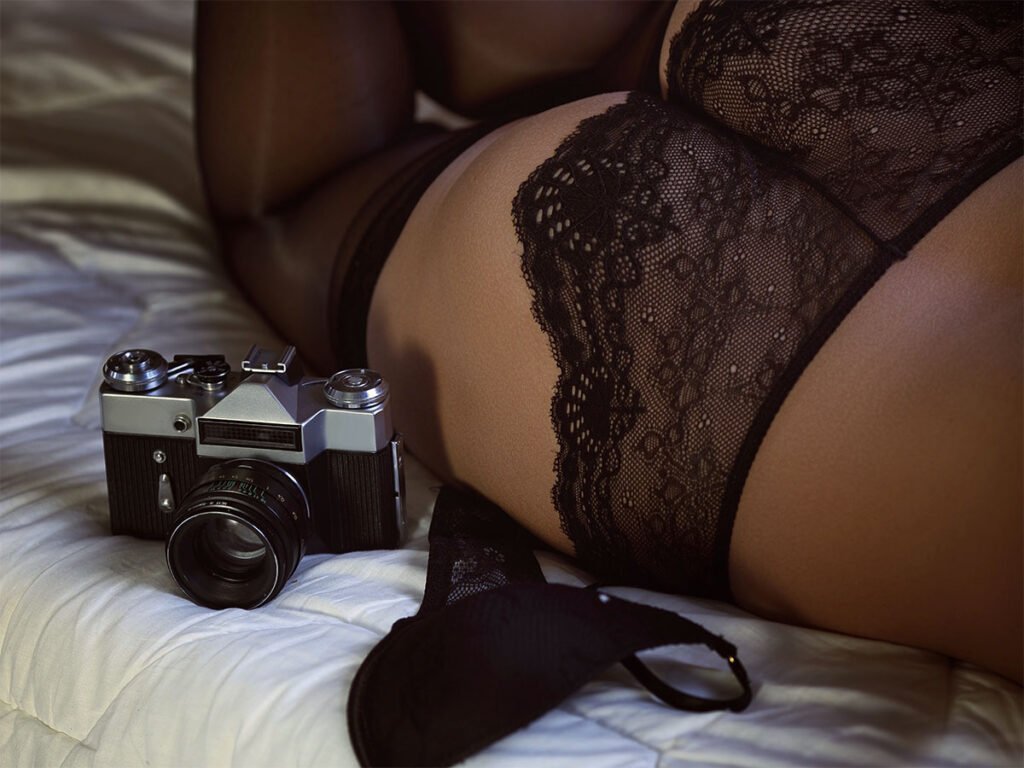
Boudoir photography isn’t just intimate portraits or soft lighting…it’s a quiet revolution in how women see and celebrate themselves. Rooted in privacy, sensuality, and self-possession, it captures that vulnerable-yet-powerful space where femininity meets confidence. From secretive beginnings to today’s bold acts of empowerment, boudoir has always been about owning your story, one intimate frame at a time. Let’s trace its journey.

Roots in Privacy: The French Origins
The word “boudoir” comes from the French verb bouder…to sulk or pout…and originally referred to a woman’s private sitting room or bedroom, a retreat for reflection or intimate company. Long before cameras, these spaces symbolized personal sanctuary.
Photography arrived in the mid-19th century, and by the late 1800s (around the 1840s–1890s), early erotic and intimate images emerged. French postcards and daguerreotypes captured women in soft, personal settings…often nude or semi-nude, artistic yet taboo. These were private, scandalous, and rarely public; sold discreetly, they pushed boundaries in an era when female sensuality was tightly controlled.
Early photographers like Félix-Jacques Moulin experimented with these intimate portraits, blending art and allure in ways that felt revolutionary.
The Roaring Twenties: Art Meets Audacity
Boudoir truly took shape in the early 20th century, especially in the 1920s in France and beyond. Upper-class women commissioned portraits in their private salons, embracing glamour amid Art Nouveau and Art Deco influences—elegant lines, natural forms, and unapologetic femininity.
Photographers like Albert Arthur Allen (working in San Francisco) pushed hard against censorship, capturing larger, curvaceous women in ornate, romantic settings. His work was bold, often illegal (nude photography faced arrests and bans), yet it celebrated real bodies with artistry. The era’s Hollywood glamour…soft focus, dramatic lighting…further shaped the aesthetic, making boudoir feel luxurious and aspirational.

The Golden Age & WWII: From Private to Public Morale
By the 1940s and ’50s, boudoir overlapped with pin-up culture. Playful, flirtatious images of women in lingerie or swimsuits became morale boosters for troops…think Bettie Page’s rebellious edge or Marilyn Monroe’s approachable sensuality. These weren’t just “for someone else”; they normalized confident, joyful femininity on a massive scale.
Government propaganda used pin-ups to recruit and uplift, turning intimate portraits into cultural icons. Boudoir evolved from hidden art to something empowering and shared.
The Shift: 1970s Liberation to Modern Empowerment
The 1970s brought real change. Amid women’s liberation, bra-burning, and body reclamation, boudoir moved beyond gifts for partners. Women booked sessions for themselves…to celebrate independence, heal, or simply feel seen.
Photography entered the “art world” more fully, with real women (not just illustrations) front and center. By the late 20th and early 21st centuries, digital tech and social media democratized it…making boudoir accessible, inclusive, and body-positive.
Today, it’s a powerful tool for self-expression. Sessions focus on confidence, individuality, and joy…no perfection required. Whether soft and romantic or bold and daring, modern boudoir helps people reclaim their narrative, embrace their bodies, and walk away feeling unstoppable.
Why Boudoir Still Resonates
Boudoir has always balanced sensuality with strength. What started as a private rebellion against norms became a celebration of authenticity. In a world full of filters and pressure, it offers permission: to be vulnerable, to be seen exactly as you are, and to love it.
At UnFStoppable Photography, we honor that legacy every session…creating safe, fun spaces where your spark shines through. Boudoir isn’t about the past; it’s about claiming your present and future, one beautiful, empowering image at a time.
Ready to write your chapter? Let’s capture it. You’ve got the story—now let’s make it unforgettable.